The industry’s sexism is much more than just getting girls behind the wheel
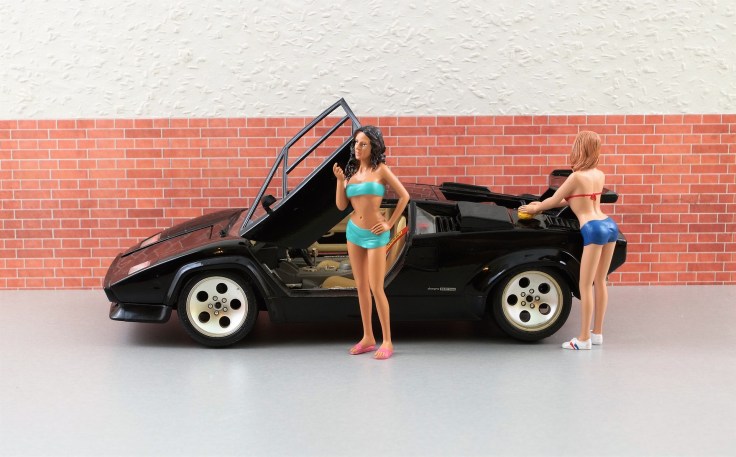
If you’ve ever been lucky enough to visit one of the many worldwide motor shows, you’ll be all too familiar with the seventies-era “show girls” that stand amongst the latest vehicles, clad in ballgowns or black leather.
Is this still a thing? Do sex and cars still go together in this much of a cliché? A sponsor of the UK’s Classic Motor Show advertised for hostesses by requesting that “If you have any concerns about wearing a tightly fitted outfit or being on your feet all day as a glamorous assistant, speak now.” An email I received straight into my inbox when asking to attend the show on behalf of the publication I was editing for.
The Geneva Motor Show takes place every March with the usual array of unveilings and glamour. Managing director of the show, André Hefti, thinks that hostesses are an integral part of his shows.
“Nice cars attract people; nice cars and pretty girls can attract even more people!” he comments. “During the press days, brands may choose to use more models, as they want journalists to take more beautiful and stylised pictures to share throughout the world.”
And there it is in the light of day – women are used at these high-profile motoring events to look pretty.
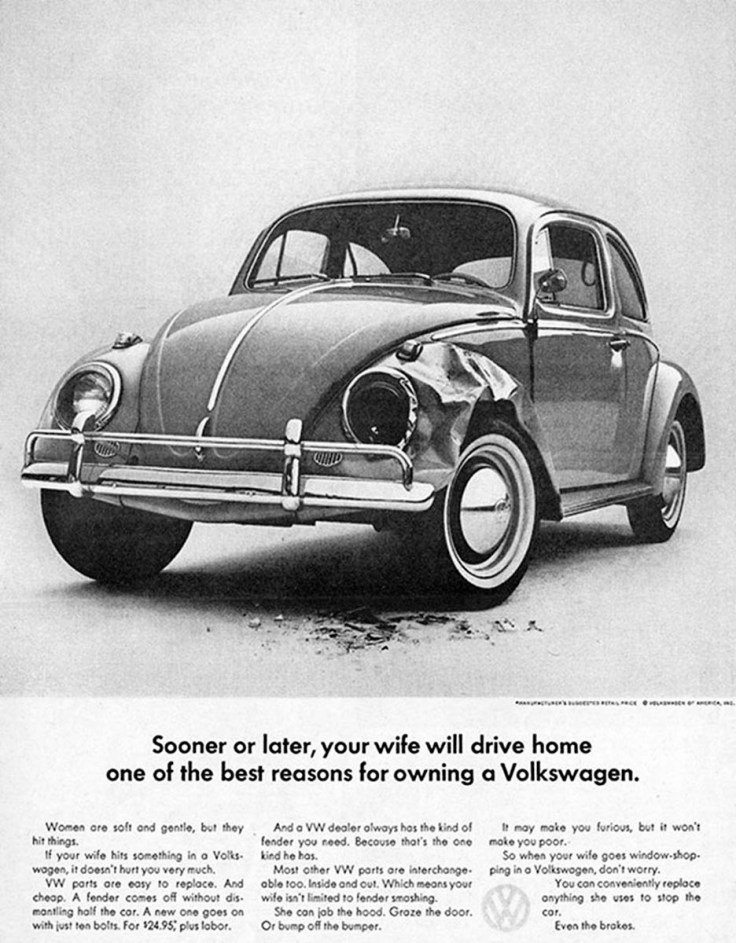
Everyone’s seen the vintage car adverts that talk about picking up women, or that your wife won’t understand how the mechanics work. Looking at one for a Volkswagen Beetle, for example, it starts by saying: “Women are soft and gentle, but they hit things.” But fast-forward to 2014, and Citroen kick off their latest campaign by suggesting women match their DS3 to their hysterically pink nail varnish. Because women don’t want engines and horsepower – they want pink.
One world-renowned female magazine even paired up with a Spanish supermini manufacturer to create an ‘exclusive’ edition of one of their cars. Small and sweet, it’s already a nice little car for women and men alike, and easily appealing to anyone interested in that sector of the market.
But that’s not enough to entice female drivers, clearly. Marketing teams for either brand have obviously never seen that women can actually drive. Instead of, perhaps, just creating a campaign with less-aggressive masculine themes, or simply with a woman behind the wheel, their new idea needs to be 100% female. So, naturally, the only colour it’s available in is white or purple.
The lead shot on the website is a woman checking herself out in the wing mirror. Photos show girls leaning out car doors and laughing with each other. And the marketing waffle that sits along side this includes the phrase: “For most women, their car is a key accessory. It’s their ticket to freedom in the city, at work or play.” Hands up if you’ve never referred to your car as an accessory?
“Because style is about being unique and oneself. Your intuition is there to guide you. You don’t need a guru or a crystal ball to give you the answers. You have them already. You are living them.” This would be laughed at if it was advertising perfume, let alone a motor vehicle.
You head to the Audi website, on the other hand, and their brochures just include normal words: “The range makes an instant impression. Whichever model you choose, you’ll have a high level of equipment as standard, including cruise control, rear parking sensors and Audi Smartphone Interface to keep you connected.”
In fact if you watch any car advert, or look through any car brochure, or flick through a motoring magazine, it’s just very… grey. Or blue. Or navy.
“For most women, their car is a key accessory. It’s their ticket to freedom in the city, at work or play.” Hands up if you’ve never referred to your car as an accessory?
There’s a number of female-only groups and societies for female motorists, including Dare 2 Be Different, founded by female F1 racing driver Susie Wolff. Their website says: “We aim to inspire the next generation to smash preconceptions and prejudices, raising the curtain on a new era in which daring to do something different is praised and encouraged.” Perfect. Exactly what the industry needs. But why is it still a necessity?
It’s not just the females in the industry that think so, either.
I spoke to one of my former male motoring journalist buddies about what his thoughts were.
“Cars were simply a form of mechanical engineering which was traditionally a career deemed inappropriate for women,” he says. “Now that sexism has been challenged, and the innovation of the motor industry is shifting from ‘old-school’ mechanical engineering to a new era of motoring, including connectivity and autonomy, it’s hopefully possible we’ll see the balance start to shift away from the male dominance that’s been a constant through the automobile’s first century.”
Likewise, another motoring news reporter also noticed the digital shift that’s happened over the past few years.
“The internet and online media platforms have forced the automotive industry into looking at different ways to generate content and attract new audiences. Yet the industry feels like it has been resistant to change when it comes to getting women working in the industry; the way the industry works has changed enormously over the past 20 years but largely the people working in it haven’t. It’s a shame because at times it feels like this industry could benefit from a new perspective.”


 We Drive Too
Leave a comment